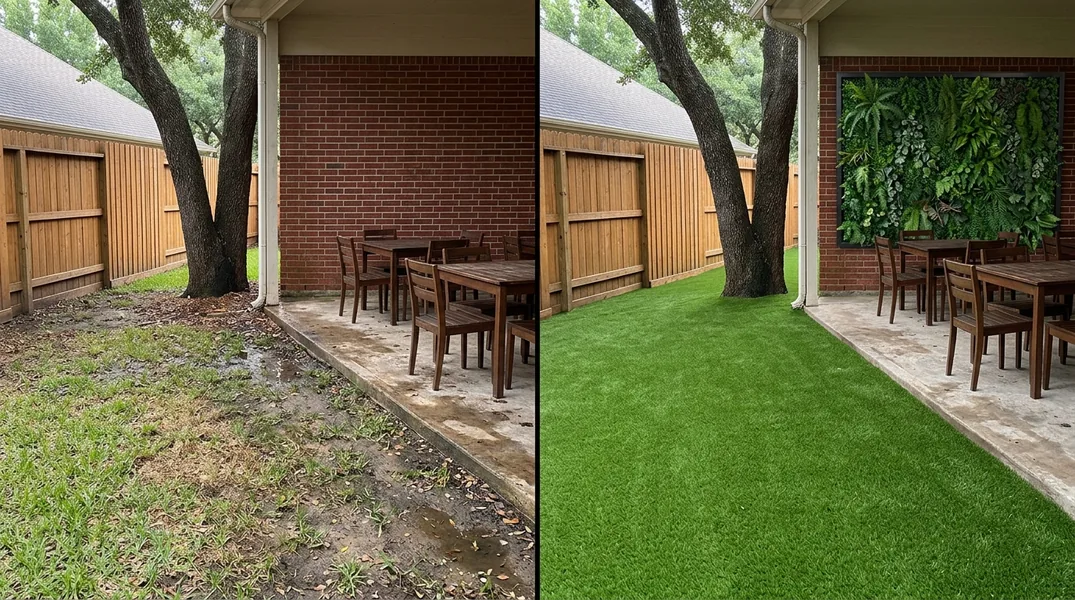
Why Katy Homeowners Can't Skip Drainage Planning
If you live in Katy or the surrounding areas, you already know that rain doesn't just fall here, it settles. The region's heavy clay soils, particularly the notorious prairie gumbo clay, hold water like a bathtub. When you're planning Residential Artificial Grass Installation, proper artificial grass drainage isn't optional; it's the difference between a beautiful lawn and a muddy, moldy disaster.
Many homeowners assume artificial grass handles water the same way natural grass does. The reality is more nuanced. While synthetic turf doesn't need to photosynthesize or absorb moisture through roots, water still pools on the surface and seeps through the backing if there's nowhere for it to go. In Katy's climate, where afternoon thunderstorms are common and humidity lingers, inadequate drainage leads to standing water, algae growth, and unpleasant odors that no homeowner wants in their yard.
Understanding Katy's Gumbo Clay: The Foundation Challenge
Gumbo clay is a dense, expansive soil that swells when wet and hardens when dry. It's common throughout the greater Houston area and presents a unique challenge for artificial grass installations. Unlike sandy or loamy soils that naturally drain, gumbo clay acts as a barrier. Water doesn't percolate downward; instead, it spreads laterally and pools on the surface. This is why the base preparation for artificial grass in Katy must be engineered specifically for this soil type.
Before any turf base prep begins, the existing clay needs to be addressed. Removing the top 4 to 6 inches of native soil and replacing it with a proper drainage layer is standard practice for professional installations. This isn't just about aesthetics; it's about longevity. A poorly prepared base will eventually fail, leaving you with sunken areas, water pooling, and the need for costly repairs. That's why investing in proper site preparation from the start pays dividends for years to come.
What to Put Under Artificial Grass: The Layered Approach
The foundation of any successful artificial grass installation is what to put under artificial grass, and this decision is critical in Katy. The standard professional approach uses a three-layer system. The first layer, sitting directly on the compacted native soil or after clay removal, is a geotextile fabric. This material prevents the clay below from migrating upward and mixing with the drainage layer while still allowing water to pass through.
Above the geotextile comes a crushed stone or gravel layer, typically 2 to 3 inches of 3/4-inch minus rock. This layer is the workhorse of your drainage system. It provides void space for water to flow through and downward, preventing pooling on the surface. The stone must be properly compacted but not so aggressively that it becomes impermeable. Many professionals use a plate compactor set to medium pressure to achieve the right density without crushing the aggregate into dust.
The final layer before the artificial grass underlay is often a layer of sand or a specialized permeable base material like recycled asphalt or engineered stone mix. This layer provides a smooth, stable surface for the turf backing and helps distribute weight evenly. The artificial grass underlay itself, typically a geotextile or foam-backed material, sits on top of this prepared base. The underlay serves multiple purposes: it provides additional cushioning, prevents fine materials from migrating upward into the turf, and contributes to overall drainage performance.
Artificial Grass Underlay: Choosing the Right Material for Drainage
Not all artificial grass underlay materials are created equal, and in Katy's wet climate, your choice matters significantly. The most common options are perforated geotextile underlays and foam-based systems. Geotextile underlays are typically polypropylene or polyester fabrics with thousands of small perforations that allow water to drain while preventing soil migration. These are excellent for artificial grass drainage and are often the preferred choice in high-moisture environments.
Foam underlays, usually made from recycled rubber or polyurethane, offer additional cushioning and comfort underfoot. They're popular for Pet Turf & Dog Run Installation because pets appreciate the softer surface. However, foam must have adequate drainage characteristics, and in heavy-rain areas, a combination approach works best. Some installers use a thin geotextile layer directly on the base stone, then add foam underlay on top. This hybrid method maximizes both drainage and comfort.
The thickness of your underlay also affects performance. Thicker isn't always better; a 6 to 8 millimeter geotextile is usually sufficient for residential applications, while foam can range from 1/2 inch to 1 inch depending on desired cushioning. The key is ensuring that whatever underlay you choose has been tested for your specific climate and soil conditions. Professional installers in Katy understand these nuances and select materials accordingly.
Proper Slope and Edge Drainage: Directing Water Away
Even with the best base materials, water needs somewhere to go, and that's where slope and edge drainage come into play. A properly installed artificial grass lawn should have a subtle slope, typically 1 to 2 percent grade, directing water toward the edges or designated drainage areas. This slope is barely noticeable to the eye but makes a tremendous difference in keeping water from pooling in low spots. In Katy's heavy-rain environment, this slope can be the difference between a dry yard and a swamp.
Edge drainage solutions vary depending on your yard's configuration. Some installations incorporate French drains or perforated drain pipes around the perimeter, directing water away from the turf area. Others use natural slope to move water toward storm drains or designated runoff areas. For Pool Surround Turf installations, edge drainage is particularly important because water from pool splashing and cleaning adds to the overall moisture load. The installation should be designed so water moves away from the pool structure and foundation.
Professional turf base prep includes careful grading and slope verification before any materials are laid. This isn't something you can easily correct after installation, so getting it right the first time is essential. Many homeowners don't realize how critical this step is until they experience their first heavy rain and see exactly where water ends up.
Installation Best Practices and When to Call a Professional Near Me
While some DIY enthusiasts attempt artificial grass installation themselves, the complexity of proper base preparation and drainage in Katy's soil conditions makes professional installation strongly advisable. A qualified installer brings equipment like plate compactors, laser levels, and specialized grading tools that ensure proper slope and compaction. They also have experience recognizing soil conditions and adjusting the base prep strategy accordingly. What works in sandy soil might fail in gumbo clay, and professionals know these distinctions.
The installation process should include soil testing or at least visual assessment to determine clay content and existing drainage characteristics. From there, the installer removes appropriate amounts of native soil, installs the geotextile barrier, adds and compacts the stone layer, installs the underlay, and finally seams and secures the artificial grass. Each step builds on the previous one, and shortcuts at any stage compromise the entire system. If you're ready to move forward with a professional installation, Katy Turf Installation offers a free estimate and can walk you through the specific requirements for your property. You can reach us at (281) 746 - 6943 to discuss your project.
Maintenance Tips to Protect Your Drainage Investment
Once your artificial grass is installed with proper drainage and base prep, maintaining that system ensures years of performance. Regular brushing to keep the turf pile upright allows water to drain more efficiently through the fibers. Debris like leaves and twigs should be removed promptly, as they can block water flow and create areas where algae or mold might grow. During heavy rain seasons, checking that drainage areas remain clear of obstructions is a simple but important task.
Occasionally rinsing your artificial grass, particularly after dusty periods or if you notice any odors, helps maintain the drainage system's effectiveness. Some homeowners use a garden hose or pressure washer on low setting to rinse the surface and flush the drainage layers. This keeps the system functioning as designed and extends the life of your installation significantly. With proper maintenance and a well-engineered base, your artificial grass in Katy will remain attractive and functional through years of Texas weather.
Looking for a professional artificial grass installation company in Katy? Katy Turf Installation responds fast for all your artificial grass installation needs.
Get a Free Quote